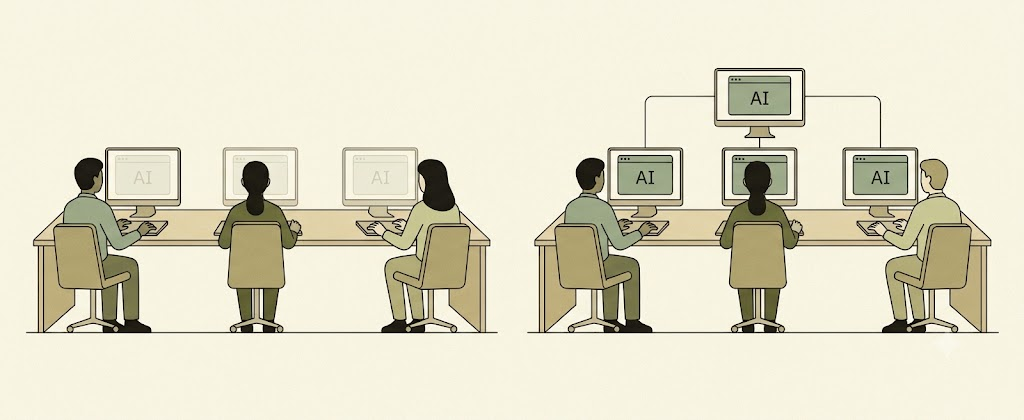
If you think nobody in your office is using AI yet, that's not the situation. That's just the part you can see.
The reality in most small firms is that several people are already using it — quietly, on personal accounts, because it helps them get through the day. They haven't asked, partly because they're not sure it's allowed and partly because it never occurred to them that it needed asking. They're not being reckless. They're doing exactly what good employees do: finding a faster way to do the work.
Which is genuinely good news, even if it doesn't feel like it at first. The hardest part of getting value from any new technology is getting people to actually use it, and that part has already happened on its own. The willingness is there. What's missing is everything around it.
Because when usage is invisible, three things are quietly true. You have no picture of how AI is being used in your business, so you can't manage it. Work is sitting in personal accounts the company doesn't control, which becomes a real problem the day one of those people leaves. And your most resourceful staff — the very people you'd most want leading this — are getting no guidance, so the productivity they're unlocking is a fraction of what it could be. Everyone's improvising alone.
The instinct, once an owner realises this is happening, is sometimes to clamp down. That's the wrong move, and it usually just pushes the usage further underground. The right move is to bring it into the light: give the resourcefulness a proper home. One company-controlled plan that everyone uses, a one-page understanding of what's fine and what isn't, and a quick monthly look at who's getting value and who needs a hand getting started.
Done that way, the shift is almost entirely upside. The same energy that's currently scattered across personal accounts becomes your biggest, fastest productivity gain — visible, supported, and pointed at the work that matters. You're not stamping out a problem. You're channelling something your team already wanted to do.