It's a good line, but it's the kind of thing every consultant says. So here's what it means in practice, for one person, on one ordinary week.
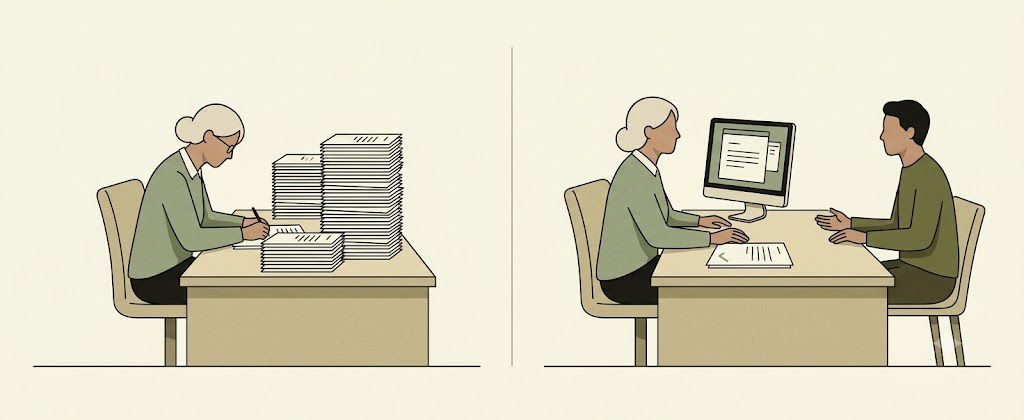
Picture a fifteen-person accounting firm, and one of its senior accountants. For years her Friday afternoons went to the same kind of work: reformatting documents, cross-checking figures against source records, chasing the small inconsistencies before anything went out the door. Necessary work, and work she's overqualified for — the sort of careful, repetitive checking that a capable person can do but that uses almost none of what makes her valuable.
Now most of that first pass happens before she sees it. The reformatting, the cross-checking, the first sweep for inconsistencies — done, and presented to her to review rather than to do from scratch. She still owns the outcome; nothing goes out without her judgment on it. But the hour of mechanical work that used to come before the judgment has largely gone. Her Friday afternoons now go to the advisory conversations clients actually pay a premium for — the work she trained for, and the work the firm can charge properly for.
Multiply that across the team and the picture the tagline points at comes into focus. The firm took on more clients this year without hiring, because the same people had more of their week back for the work only they can do. That's the whole idea. Not fewer people doing the same work — the same people with room for better work.
This is worth being precise about, because "AI for productivity" gets sold as either a threat or a miracle and it's neither. Nobody's job disappeared. What disappeared was the part of the job that nobody went into accounting to do. The capacity that frees up is real, it's measurable in hours, and it lands exactly where you'd want it: on the high-value work your best people are too busy to get to.