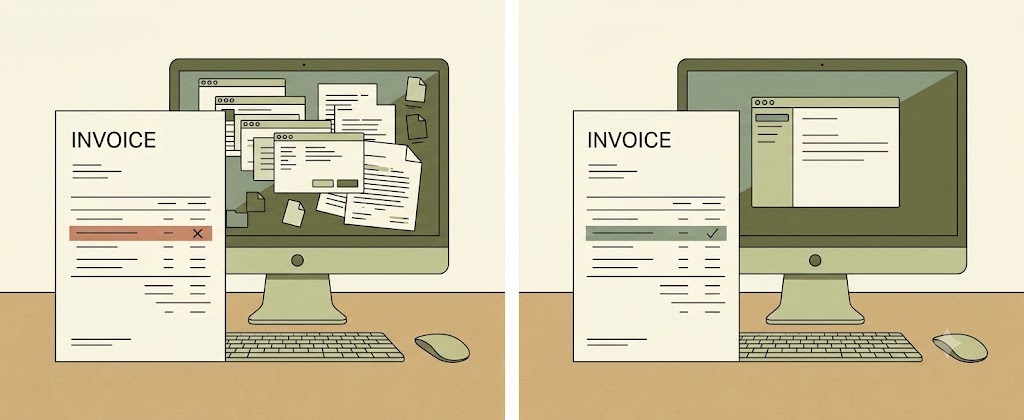
Somewhere in your business there's a subscription you're still paying for that nobody has opened since the second week. Maybe it was Copilot, bought in after a good demo. Maybe a ChatGPT Team plan you put the whole office on. The invoice arrives every month. The usage doesn't.
This is so common it's almost the default, and it isn't a failure of nerve or a sign your team is behind everyone else. It's the predictable result of treating AI as something you buy rather than something you adopt.
Buying the licence is the easy five per cent. The hard ninety-five is getting the thing woven into the specific way your people already work — the actual review process, the actual client onboarding, the actual end-of-month grind. A tool that sits next to the work gets ignored. A tool that sits inside the work gets used. Nothing about paying for a subscription moves a tool from the first category to the second.
Here's how the dust settles. The demo shows the tool doing something impressive in the abstract. Everyone nods. Then Monday morning your senior accountant has forty things to do and no clear idea which of them this new thing is supposed to help with — so they do all forty the way they always have. The tool never fails dramatically. It just never starts. And after a few weeks of that, opening it feels like one more thing to learn rather than a way to get the day back, so it quietly drops off the screen.
The firms that get real value from AI aren't the ones that bought the best tool. They're the ones who treated adoption as a job in its own right: someone found the two or three tasks where the tool genuinely earns its place, set it up to do exactly those, and sat with the people who do that work until it fit their hands. Once a tool has saved someone a real hour on a real task, you never have to sell them on it again. They'll find the next use themselves.
If you're paying for something that isn't being used, the answer usually isn't a different tool. It's closing the gap between access and adoption — and that gap is smaller and more fixable than it looks from where you're standing.