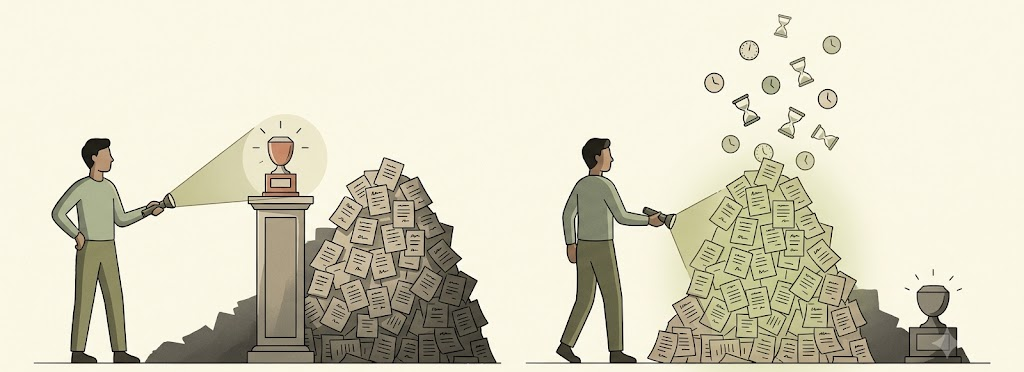
Ask an owner where AI would help their business most and they'll usually name the wrong thing — and they'll name it confidently. It's almost always one of two answers: the task that personally annoys them, or the flashy, customer-facing idea that sounds impressive at the pub. Both feel obviously right. Both are usually wrong.
The reason the instinct misleads is worth understanding, because it's the same mistake nearly everyone makes. The tasks that annoy you are not the same as the tasks that cost you. The annoying ones are loud — they're the thing you complain about on a Friday. The expensive ones are quiet: work that's repeated many times, by capable people, each instance just small enough that nobody ever decides it's worth fixing. It hides in plain sight precisely because no single occurrence is a big deal.
So the real prize is rarely glamorous. It's high-volume, repetitive work that takes some judgment to get started but very little to repeat — and more often than you'd think, the first genuine win turns out to be somewhere in the back office or the compliance grind, not the customer-facing showpiece people reach for first. Nobody brags about automating the monthly reconciliation or the document checks. But that's frequently where the hours actually are, and hours are the thing you're trying to get back.
This is why "what could AI do?" is the wrong opening question. It invites the impressive answer. The better question is quieter: where is my team spending hours on work that's more repetitive than it is difficult? Follow that question honestly and it tends to lead somewhere unexpected — and far more valuable than wherever your first instinct pointed.