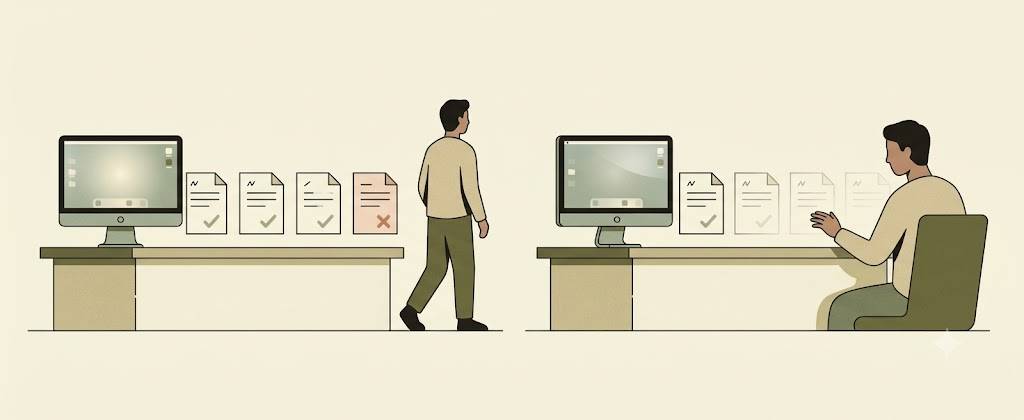
The workflow worked perfectly in March. By June it had quietly stopped — and nobody inside the business noticed until a client did.
That sentence describes more AI projects than anyone likes to admit. Not dramatic failures. Drift. The kind where everything keeps running and the output slowly stops being right.
We're all trained by decades of ordinary software to expect the opposite. You bought a version of a program, it behaved the same way for years, and the only time it changed was when you chose to upgrade. Software sat still. You could install it and forget it.
AI doesn't sit still. The model behind the tool you're using gets updated, and its behaviour shifts a little. A vendor changes their product or their pricing. An integration between two of your systems quietly stops reconciling the way it used to. None of this sends you an email. The work just drifts — a small inaccuracy here, a slightly-off summary there — until one day it's wrong enough to matter, and more often than not it's someone outside your business who spots it first.
This is not a reason to be wary of AI. It's a reason to be honest about what owning it actually involves. A race team doesn't build the car and walk away — they have a crew watching it every lap, because the difference between winning and a blown engine is noticing the problem before it becomes one. AI systems need the same kind of attention. Someone has to watch for the drift and correct it before it reaches a client.
The mental model that gets firms into trouble is "set and forget." The one that works is closer to "set, and keep an eye on it" — which sounds less convenient, but it's simply the nature of the technology, and planning for it from the start is far cheaper than discovering it the hard way. The businesses that do well with AI over years, not weeks, are the ones who decided up front whose job it is to keep the thing healthy.