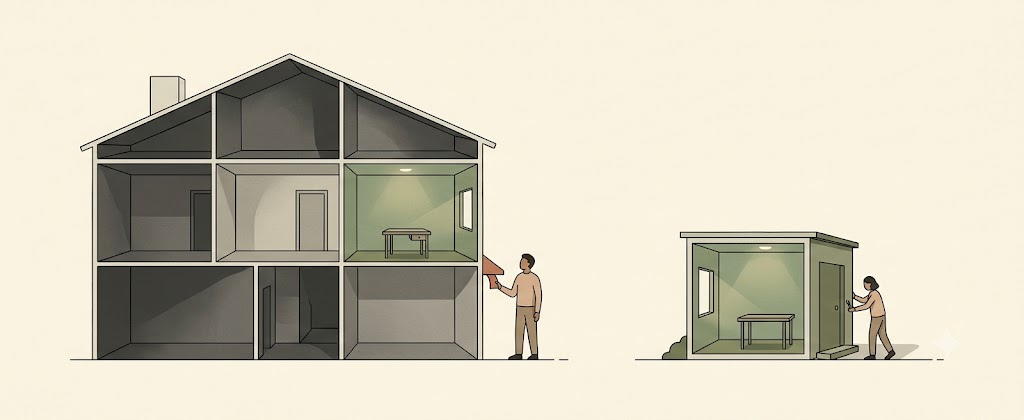
Look at the software your firm pays for and you'll usually find at least one platform where you use a fraction of what you're paying for. You bought the whole thing for one or two features — a particular report, a specific workflow, one integration that mattered — and now you rent the entire platform, every month, forever, to keep those few pieces you actually use.
For a long time that was simply the deal, and it was the right deal. Building your own version of that one feature was expensive and slow. Worse, building it meant owning it forever — every time something changed underneath, you'd be on the hook to keep it running, and no small business has the appetite to become a software maintenance shop on the side. So you rented the whole house to use one room, and it made sense, because the alternative was worse.
Two things have changed, and the second one matters more than the first.
The cost of building that one feature has collapsed. The specific report, the small tool, the narrow automation you actually need — the thing that used to take months and a real budget can now be built for a fraction of that. That's the part everyone's heard about.
The part that gets missed is the maintenance. The reason building used to be a trap wasn't really the upfront cost — it was the forever cost, the burden of keeping the thing alive as the world shifted around it. That burden hasn't vanished; it's real, and ignoring it is how firms end up with tools nobody maintains. But it can now be carried by someone whose entire job is exactly that: watching the thing, catching the drift, keeping it healthy while you get on with your work. When the upkeep is someone else's standing responsibility rather than yours, the maths that made building a trap changes.
Put those two shifts together and the old default flips. For the right piece of work — settled, repeated often, currently costing you a whole platform's rent to use one corner of — owning a small tool that does precisely what you need, with someone keeping it running, can genuinely beat renting the sprawling thing forever.
The honest caveat is the one we'd give you in person: this isn't true for everything, and we'll tell you plainly when it isn't (we wrote a whole piece on when not to build). But it's true far more often than it was even a year ago, and most firms haven't noticed the ground has moved under them.