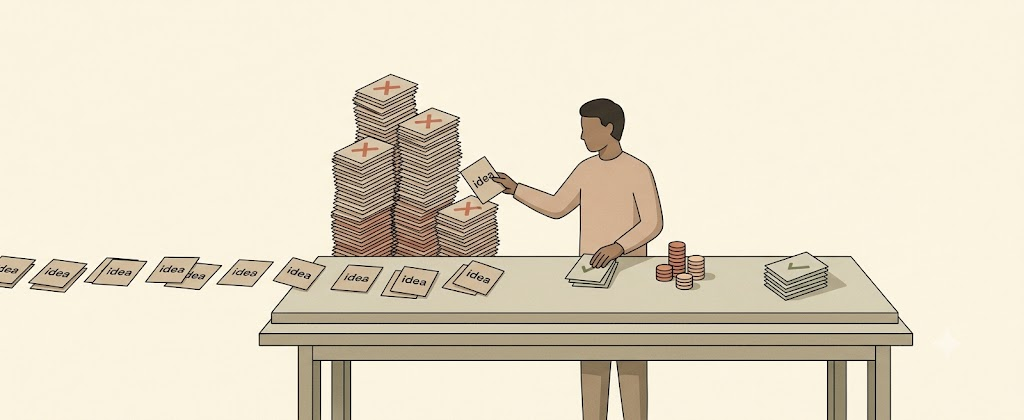
We make our money building and implementing things. So it should mean something when we tell a client not to — and we do it more often than you'd expect. Here's the actual rule behind it, because "we're honest" is what everyone claims and a heuristic is what you can hold us to.
We'll talk you out of building when any one of three things is true.
When the problem isn't settled yet.
If the way you do the work is still changing shape month to month, anything we build to fit it will be out of date before it earns its keep. Better to let the process stabilise — or keep doing it by hand a while longer — than to pour effort into automating a moving target.
When the volume's too low.
Every custom thing carries a quiet ongoing cost: it has to be kept working as the technology underneath it shifts. If a task only happens occasionally, the work it saves will never repay the work of keeping it healthy. Some jobs are simply meant to stay manual, and recognising which is part of the job.
When something off-the-shelf already does it well enough.
If a tool you can buy tomorrow covers eighty per cent of what you need, building your own version to chase the last twenty is rarely worth it. We'd rather help you get the most out of what already exists than sell you something bespoke you didn't need.
The flip side — the cases where building genuinely is the right call — is its own conversation, and it's changed a lot recently. But the discipline matters more than the enthusiasm. A consultant who only ever recommends building is selling hours, not judgment, and you can't tell the difference until the invoice arrives.